
 By mr euro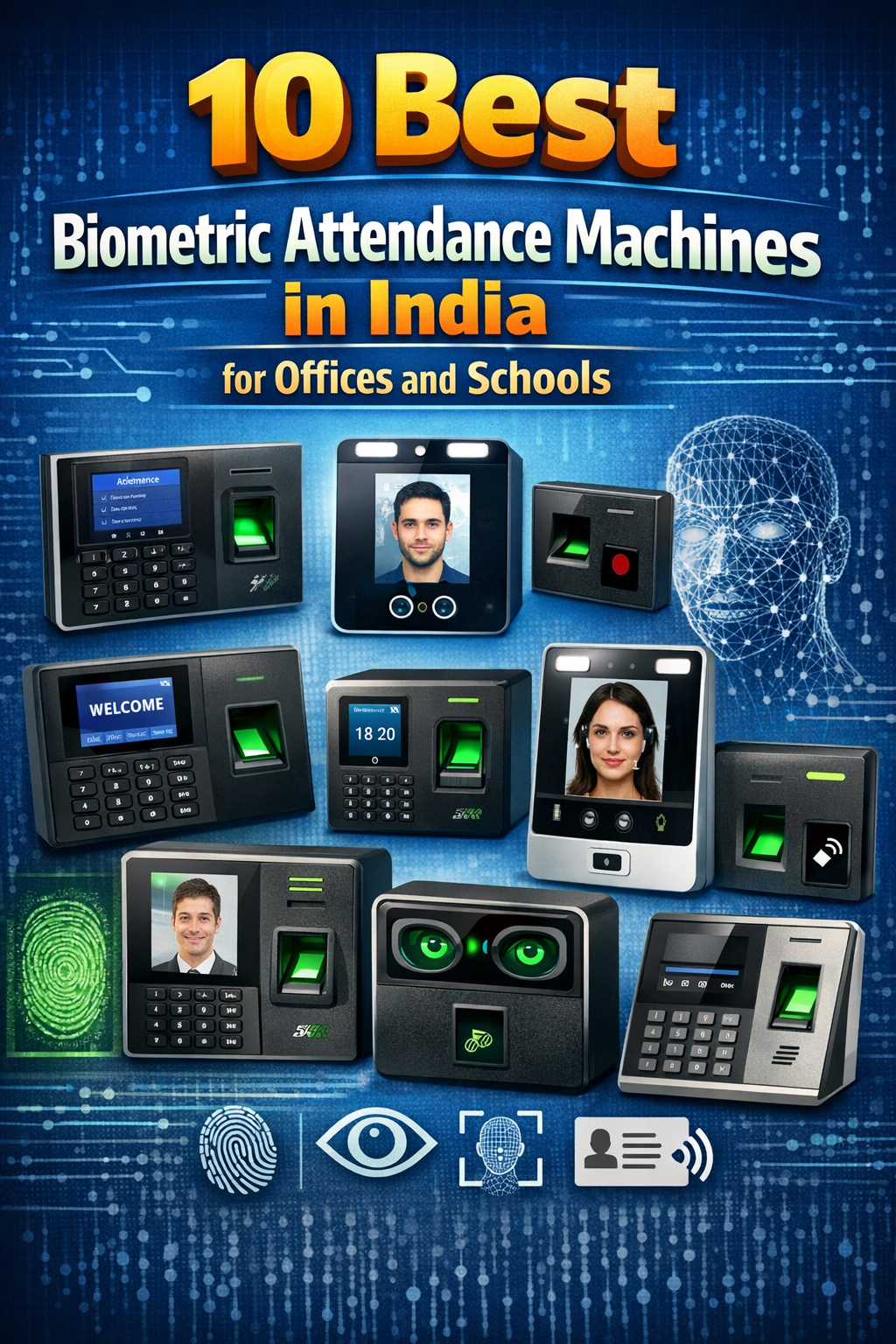
Biometric technology has become an integral part of modern attendance management. Whether you run a school, a startup, or a large enterprise, a reliable biometric attendance system helps streamline workforce monitoring, minimize proxy attendance, and enhance accountability. If you’re exploring options for the best biometric attendance machine, the Indian market offers several robust, cost-effective, and feature-rich choices suitable for diverse environments.
The guide below explains how these devices work, what features actually matter, and which models are well-suited for schools and offices. The aim is simple: help you make an informed decision without jargon overload.
A decade ago, manual registers and swipe cards were common. Today, organizations prioritize:
- Accuracy: Fingerprint and face authentication reduce buddy punching
- Speed: Instant verification avoids queues at entry points
- Safety: Contactless options support hygiene-sensitive environments
- Analytics: Cloud dashboards simplify report generation and payroll integration
Biometric systems are also aligned with digital transformation initiatives in India, helping institutions move from paper-based to automated workflows. Numerous industry reports highlight how automated attendance reduces administrative overhead while improving compliance and transparency.
Understanding the categories helps you match a device to your environment:
Popular in offices and small institutes; affordable and highly accurate.
Useful in schools, factories, and hospitals where contactless operation is preferred.
Support both cards and biometrics—ideal for mixed-use environments.
Before we list the 10 best machines, consider these essential features:
- Large user storage capacity
- Fast verification speed
- Battery backup for power interruptions
- Mobile app or cloud software compatibility
- Integration with payroll or ERP systems
- Durable build for high-traffic areas
- Indian warranty and after-sales support
Below is a curated, informative list designed for real-world use cases rather than just specification comparison. The intent is to cover devices suited for both schools and corporate environments.
Combines fingerprint and facial recognition, making it versatile. Works well in offices where mask-wearing may be common or fingerprints are inconsistent due to manual labor.
Ideal for organizations using cloud-based HR software. Real-time syncing reduces the need for manual data transfer and is particularly useful for multi-branch companies.
Suitable for schools where student attendance is captured via ID cards while staff use fingerprints. Provides flexibility without additional hardware.
Ensures hygiene and speed during peak entry hours. Often preferred in universities and hospitals because it reduces bottlenecks.
A practical solution for construction sites, field teams, or temporary campuses where power supply may be inconsistent.
Supports thousands of fingerprint templates, making it appropriate for large enterprises or public institutions with high headcounts.
Multimodal authentication boosts accuracy and reduces rejection rates for elderly or manual labor workers whose fingerprints are worn out.
Some modern devices bundle attendance with basic temperature screening—useful in health-sensitive environments. Always verify compliance before deployment.
Provides browser-based dashboards, remote monitoring, and automated reports—valuable for administrators managing multiple locations.
Compact, user-friendly, and economical, these devices offer essential features without unnecessary complexity, making them suitable for small institutions.
Nialabs has emerged as a solution provider focusing on practical, user-centric biometric and automation products in India. Their offerings commonly emphasize:
- Ease of deployment
- Integration with attendance and payroll software
- Support for schools and mid-sized offices
- Reliable service and consulting orientation
Many organizations value Nialabs for its focus on end-to-end implementation rather than just selling standalone devices. This approach helps institutions choose appropriate hardware, configure attendance policies, and train staff—key aspects often overlooked during procurement.
- Eliminates time theft and proxy attendance
- Builds punctuality culture
- Simplifies payroll processing
- Enhances security by restricting unauthorized entry
HR teams also benefit from digital logs and audit trails, making compliance audits far more straightforward.
Schools require systems that are simple, safe, and scalable. Biometric machines help:
- Automate student and staff attendance
- Inform parents via integrated SMS or app notifications
- Reduce manual errors in record-keeping
- Improve campus security by tracking entry and exit points
For higher education campuses, central attendance records also support accreditation and administrative reporting.
Prices typically vary based on:
- Authentication type (fingerprint vs. face)
- Storage capacity
- Connectivity (LAN, Wi-Fi, 4G)
- Software licensing or subscription costs
- After-sales service and warranty
While entry-level devices may seem attractive, long-term value depends on durability and service availability. Always evaluate total cost of ownership, not just purchase price.
- Position devices at stable lighting and mounting heights
- Enroll users properly to reduce false rejections
- Train staff on hygienic use and maintenance
- Create backup reports regularly
- Pair hardware with dependable attendance software
Well-planned implementation often matters more than brand or model.
Biometric attendance machines are no longer optional—they’re foundational tools for efficient administration. From hybrid systems to cloud-connected devices, India offers a broad spectrum suitable for offices and schools of every size. When selecting the best biometric attendance machine, emphasize reliability, support, and usability rather than just technical jargon.