
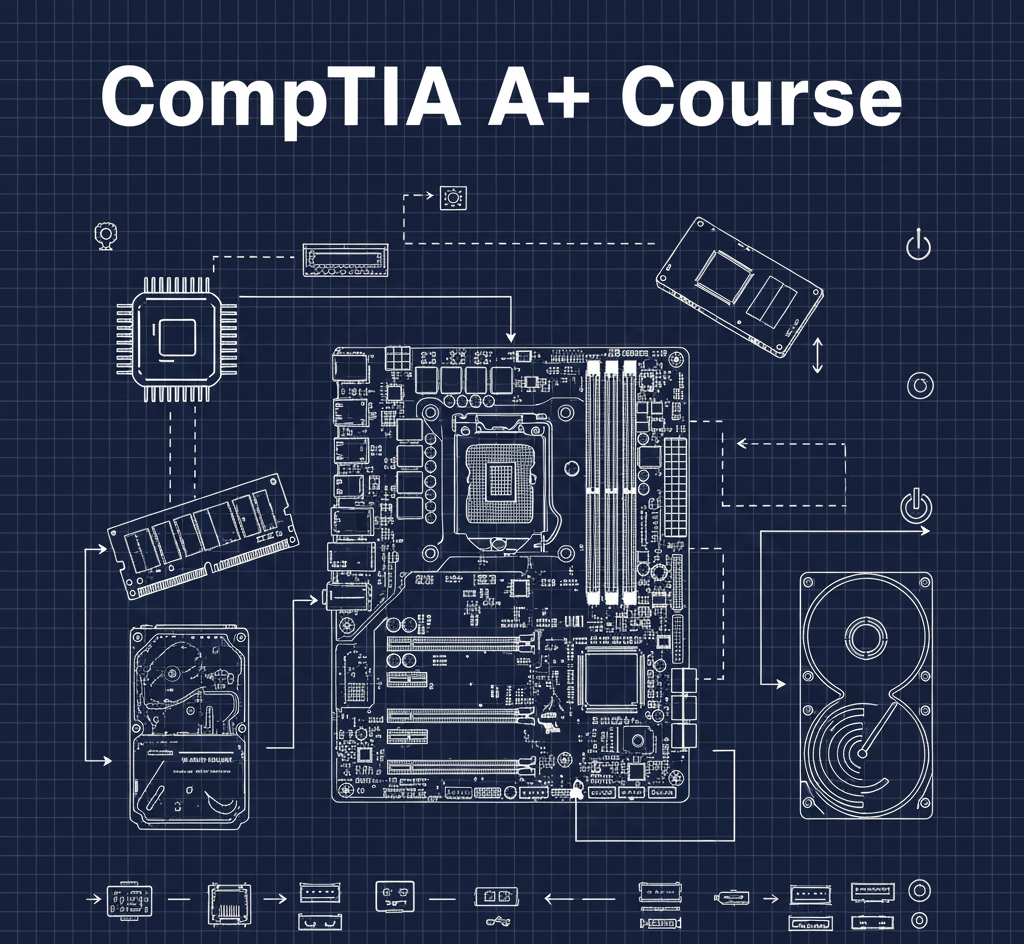
A CompTIA A+ course is often the first step for aspiring IT professionals looking to build a stable career in information technology. Whether someone wants to work in technical support, system maintenance, or endpoint management, the CompTIA A+ certification proves they have the foundational knowledge to begin. This globally recognized entry-level certification validates essential hardware, software, troubleshooting, and networking skills required in real-world environments.
Unlike college classes or generic online tutorials, the A+ course is aligned directly with what hiring managers expect from new IT technicians. It teaches students to think logically, apply problem-solving skills, and handle customer-facing issues with confidence. With employers increasingly relying on certifications as proof of ability, the CompTIA A+ course provides a competitive advantage for those starting their IT journey.
What the CompTIA A+ Course Covers
The CompTIA A+ course is designed to prepare candidates for two core certification exams: Core 1 (220-1101) and Core 2 (220-1102). Together, these exams cover a wide range of technical topics that make up the foundation of IT support roles. Core 1 focuses on hardware, networking, mobile devices, and virtualization, while Core 2 focuses on operating systems, security, software troubleshooting, and operational procedures.
These domains reflect the types of challenges technicians face daily. From installing hardware to configuring OS settings and identifying malware symptoms, A+ certified professionals become capable of diagnosing and resolving a wide range of technical issues. This practical skillset is the reason the certification is often required by government agencies, schools, and corporations hiring IT support staff.
To explore a reliable CompTIA A+ learning path with structured preparation support, click here for more details.
Key Skills You’ll Learn in a CompTIA A+ Course
One of the main benefits of enrolling in a CompTIA A+ course is the structured skill-building it provides. The course isn’t limited to memorizing technical terms; it’s about applying knowledge to solve real user problems. Learners will become familiar with BIOS configuration, file system repair, device connectivity, and best practices in safety and communication.
Each topic builds a layer of professional readiness. By the time a candidate completes the course, they can troubleshoot hardware issues, resolve software errors, perform system upgrades, and provide secure support for both remote and physical users.
Here’s an overview of the skills developed through a CompTIA A+ course:
| Skill Area | Description |
|---|---|
| Hardware | Install, configure, and troubleshoot PCs, mobile devices, and printers |
| Networking | Understand TCP/IP, ports, protocols, and wireless standards |
| Operating Systems | Manage Windows, macOS, Linux, and mobile OS environments |
| Security | Identify and respond to common security threats |
| Troubleshooting | Use structured methods to resolve common technical issues |
| Operational Procedures | Learn safety, documentation, and communication practices |
These skills align directly with the performance-based questions found on the A+ certification exams.
Different Course Formats to Fit Your Learning Style
Today’s learners benefit from flexible study formats. The CompTIA A+ course is available in instructor-led, self-paced, and hybrid formats to suit different schedules and preferences. Instructor-led courses provide structured guidance and live support, while self-paced courses allow learners to control the speed and focus of their learning.
Many learners choose hybrid options that combine recorded lessons with occasional live Q&A sessions. This model provides structure without sacrificing convenience. Whether studying full-time or balancing a job, candidates can find a format that helps them prepare efficiently.
Who Should Take the CompTIA A+ Course
The comptia a+ course is ideal for beginners with little to no experience in IT. It’s often recommended for:
- High school or college students interested in tech
- Career changers moving into IT from unrelated fields
- Entry-level job seekers targeting help desk or support roles
- Military members preparing for civilian technical careers
Even those who already work in IT but lack formal certification benefit from this course by reinforcing foundational concepts and proving their knowledge to employers. It’s the most accessible yet comprehensive certification for entering the IT workforce.
How the Course Prepares You for Real IT Roles
Beyond passing the exams, the CompTIA A+ course prepares learners for real-world scenarios. Many training programs include ticket-based simulations that mirror the environments technicians face at the service desk. These simulations teach time management, prioritization, and the importance of clear documentation.
The course also emphasizes soft skills, such as handling customer frustration, explaining technical steps, and following workplace policies. These elements are crucial in professional environments, and the A+ course blends technical content with interpersonal skills that matter in IT support roles.
How Much Does a CompTIA A+ Course Cost?
The price of a comptia a+ course depends on the provider, learning format, and included resources. Self-paced options are generally more affordable, while instructor-led and bootcamp formats cost more due to live teaching and structured schedules.
Here’s a general breakdown:
| Course Type | Typical Cost | Inclusions |
|---|---|---|
| Self-Paced Online | $200 – $500 | Video lessons, quizzes, practice exams |
| Instructor-Led Virtual | $500 – $1200 | Live sessions, lab access, mentorship |
| Bootcamp / Intensive | $1000 – $2000 | Fast-track learning with full support |
| Study Bundles | $300 – $700 | A+ course + exam voucher + practice tests |
Many candidates also choose to supplement their course with reliable practice content. Platforms like Cert Empire provide realistic practice exams that help learners identify weak areas, understand exam question patterns, and build test-day confidence.
Benefits of Taking a Verified A+ Course
Not all courses are created equal. Choosing a verified or authorized CompTIA training partner ensures the content aligns with the most current exam objectives. These providers regularly update their materials and use certified instructors who understand the exam structure and scoring methodology.
Using official or recognized study content also helps avoid misinformation, outdated tutorials, or inconsistent explanations. Many successful A+ candidates attribute their pass rate to trusted learning sources and thorough practice.
One benefit of platforms like Cert Empire is that their practice sets often mirror the scenario-based style of A+ questions, giving students a deeper understanding of how to analyze real issues under time pressure.
Is the CompTIA A+ Course Worth It?
With the growing need for qualified IT professionals, the answer is yes. The A+ certification remains a hiring requirement for roles such as help desk technician, IT support specialist, and field service technician. Employers trust it because it tests both technical knowledge and critical thinking.
The A+ course helps bridge the gap between enthusiasm and readiness. It’s ideal for those starting from scratch and provides a clear, job-focused path into tech careers. For 2025, it remains one of the most affordable and high-impact credentials available to new entrants in IT. You can view our latest Facebook post here, where we share more insights on this topic.
Final Thoughts
The CompTIA A+ course remains the most reliable route for launching a career in IT. It teaches real skills, prepares candidates for real challenges, and leads directly to employment opportunities across a wide range of industries. Whether you’re switching careers or just getting started, structured A+ training builds the foundation you need to succeed. With the right preparation and support, learners can pass their certification exams confidently and step into the IT field with clarity and skill.