
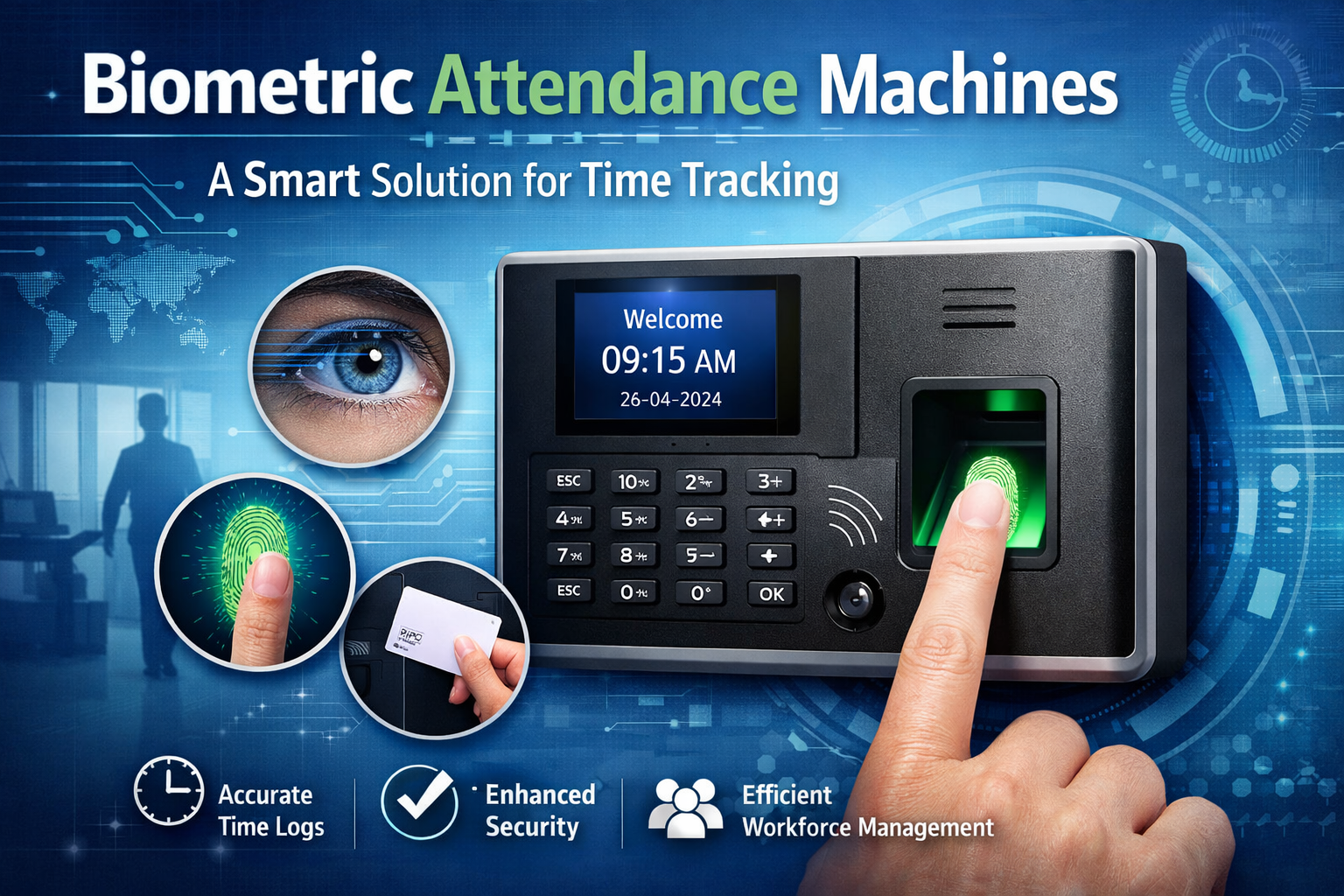
Choosing the right biometric attendance system is no longer just a technology decision; it directly affects productivity, payroll accuracy, and overall workforce transparency. Organizations of all sizes are moving away from manual registers and traditional swipe cards toward biometric tools that verify identity through unique physical or behavioral traits. When you know what to look for, it becomes much easier to select a solution that is reliable today and adaptable for tomorrow’s needs.
Below is a practical guide to the top features that truly matter, written with business leaders, HR professionals, and IT managers in mind.
Why biometrics matter in modern workforce management
Biometric systems have become popular because they minimize buddy punching, reduce administrative work, and improve record accuracy. Fingerprint, facial recognition, palm vein scanning, and iris recognition are among the most common modalities. When implemented responsibly, these tools not only streamline attendance tracking but also enhance security and compliance.
As remote and hybrid work models continue to evolve, many companies now expect attendance systems to go beyond simple clock-in and clock-out logging. They want analytics, integration with payroll and human resource systems, and easy onboarding for employees. With so many solutions available, the real challenge is identifying what differentiates a strong platform from a basic one.
Accuracy and reliability of recognition
Consistent performance in real-world conditions
At the top of the checklist is biometric accuracy. The system should work consistently across different lighting conditions, skin tones, and environmental environments such as factories or outdoor sites. False rejections frustrate employees; false acceptances create compliance risks. Look for systems tested on diverse datasets and engineered to adapt to noise, glasses, masks, or minor physical changes.
Modern systems often use multimodal biometrics—combining facial recognition with fingerprint or PIN—to strike a balance between convenience and reliability. This becomes especially useful in industries where workers wear gloves or protective equipment.
Strong data security and privacy controls
Encryption, consent, and compliance
Biometric information is highly sensitive. Any solution you choose should emphasize data protection through end-to-end encryption, secure storage mechanisms, and clear consent workflows. It also helps when the vendor aligns with global privacy frameworks such as GDPR or similar regional standards. Transparent data handling policies build employee trust and protect organizations from legal exposure.
Administrators should be able to define access roles, anonymize records where required, and manage retention periods. Audit trails and system logs add an extra layer of accountability.
Seamless integration with HR and payroll systems
Reducing manual work through automation
Attendance data delivers real value only when it flows smoothly into existing business systems. Choose a biometric attendance platform that integrates with HRMS, ERP, and payroll software so that working hours, overtime, and leave are calculated automatically. APIs, webhooks, and plug-and-play connectors can dramatically reduce manual reconciliation errors.
This capability is especially beneficial for organizations with multiple locations or complex shift structures. Integration ensures that managers spend more time leading people and less time fixing spreadsheets.
Scalability and multi-location management
Growing with your organization
Even if your workforce is small today, your system should be capable of scaling. Cloud-based biometric attendance solutions are often easier to expand across sites than purely on-premise deployments. Look for centralized dashboards, role-based access, and the ability to manage multiple branches from one console.
For enterprises with mobile or field staff, mobile biometric verification paired with geofencing adds further flexibility without compromising accountability.
Ease of use and employee experience
Intuitive interfaces boost adoption
User experience directly affects adoption rates. A well-designed biometric device or mobile app should be intuitive, quick to respond, and supportive of accessibility needs. Clear visual prompts, multilingual support, and fast processing times help reduce queues during peak hours.
For administrators, ease of use translates into simple configuration, straightforward reporting, and minimal maintenance demands. Training requirements should be low, enabling HR teams to focus on strategic tasks.
Advanced reporting and analytics
Turning attendance into actionable insight
Beyond tracking presence, modern systems provide dashboards and analytics that reveal trends: tardiness, absenteeism, overtime patterns, and department-wise productivity metrics. Exportable reports support audits and performance management, while real-time notifications help supervisors respond quickly to irregularities.
Predictive insights are increasingly common, helping decision-makers anticipate staffing needs or detect anomalies early.
Offline capability and network resilience
Business continuity features
In many regions and industries, uninterrupted internet connectivity cannot be guaranteed. Choose a solution that stores data locally when offline and syncs automatically once the connection is restored. This ensures attendance logs remain accurate in remote facilities, construction sites, or temporary project locations.
Vendor credibility and support
Why the right partner matters
Technology is only part of the equation; the provider’s expertise and support structure matter just as much. Evaluate implementation assistance, training resources, and after-sales service. A responsive support team helps resolve issues quickly and protects your investment.
Here, organizations such as NiaLabs have carved out a strong reputation by combining robust biometric technologies with user-centric design and dependable support services. Their focus on innovation, practical deployment, and compliance-aware solutions has made them a trusted partner for businesses seeking reliable workforce management tools.
Cost of ownership and long-term value
Look beyond the device price
While budget matters, the cheapest option is not always the most cost-effective. Consider licensing fees, hardware durability, maintenance costs, and software upgrade policies. A high-quality biometric attendance platform should lower administrative overhead, reduce payroll discrepancies, and provide measurable returns through operational efficiency.
Final thoughts
A well-chosen biometric attendance solution strengthens organizational transparency, simplifies compliance, and enhances overall employee experience. By focusing on accuracy, security, usability, integration capability, and vendor reliability, you reduce risk and position your organization for sustainable growth. Taking the time to evaluate these features thoughtfully helps ensure you implement a system that serves people first while delivering the technological advantage your business needs.