
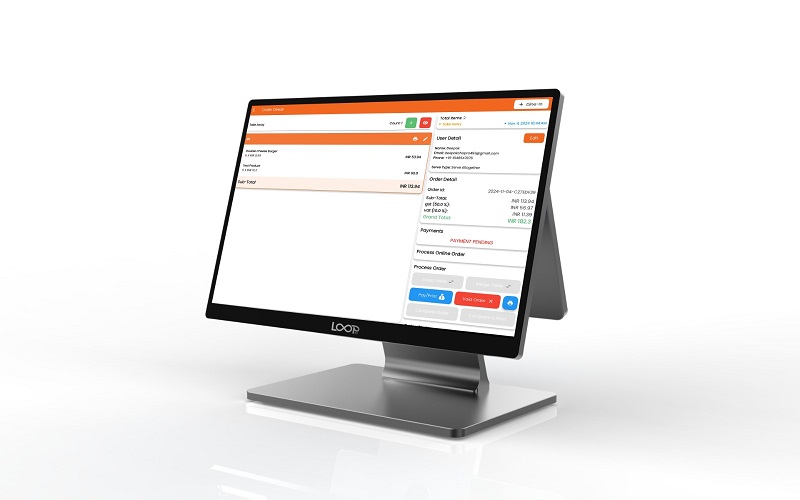
In today’s fast-evolving world, a POS system for restaurant is a mirror for the food industry, reflecting both maximum profits and customer satisfaction. Point of Sale (POS) systems are software designed to benefit owners, employees, and customers, making it a true win-win solution.
The journey from manual work to digital assistance has come a long way. This technology helps businesses achieve their goals by streamlining tasks, reducing errors, and managing operations smoothly. It empowers restaurants to oversee store data, track employee performance, and manage budgets transparently. A POS system handles everything a restaurant needs—reservations, billing, menus, orders, and payments—serving owners, employees, and customers alike.
This blog explores POS system integration, setup, how it works, why it’s needed, and its impact on the food industry. The contributions of POS systems add significant value to restaurant workflows and operations.
How the POS System Works
A POS system for restaurant comes with several advantages, from taking orders to generating receipts and managing payments. This technology is designed to make daily operations easier, accurate, and efficient. It has improved the entire food preparation and serving process, ensuring quick and reliable results. Here are the ways it enhances restaurants:
Taking Reservations and Orders
When a customer sends a reservation request, the POS system checks table availability before confirming or rejecting the booking. It records all essential details like date, time, and customer information. The system automatically sends a confirmation and a reminder to the clients. Employees can also inquire about special occasions to arrange seating, décor, or billing appropriately.
Creating Product Receipts
Menus are displayed digitally on screens, QR codes, and apps, showing all available food items. When customers select an order, the POS system records the quantity, price, and product details. Customers can customize orders and apply offers or coupons. It generates receipts instantly and supports multiple payment modes, including cash, card, and QR code payments.
Inventory Control
The system automatically updates inventory, tracking missing or required items. It manages product information, including names, expiry dates, and quantities. By storing data on orders, cancellations, and pricing, the POS system helps calculate profits and expenses accurately, reducing errors and minimizing wastage.
Data Monitoring
POS systems simplify storage of daily, monthly, and yearly data. They track sales, purchases, costs, and profits while sending reminders for out-of-stock items, vendor payments, and taxes. Owners can evaluate which offers work best and monitor employee performance, including working hours, commissions, and service quality. Backups ensure data safety and support informed decision-making.
Why POS Systems Are Useful for Multiple Food Outlets
POS systems streamline operations across the food industry, reducing errors, saving labor, and minimizing wastage. They are essential for restaurants, pizza places, bakeries, and cafes by enabling online menus, ordering, and QR payments.
Pizza Outlets – Custom orders are common, and digital platforms like Zomato or Uber Eats provide discounts and coupons. POS systems help track inventory, orders, and delivery times, ensuring fast service and reduced wastage.
Restaurants – With high daily orders, POS systems prevent order mix-ups and delays by displaying orders directly to chefs. They handle multiple online and offline orders simultaneously and accept all payment modes.
Bakeries – POS systems manage pre-orders for cakes, cupcakes, and other customized items. They track ingredient levels like flour, sugar, and chocolate and generate different billing receipts for pre-orders, dine-in, and delivery. This improves service quality and reduces wastage.
What Makes POS Systems Indispensable
POS systems are reliable and adaptable for any food business. They enable fast reservations, accurate order tracking, efficient food preparation, and smooth delivery. By handling billing, payments, and customer service, they save human effort and improve operational efficiency.
POS systems also help with cost control, inventory management, and record-keeping for profits and taxes. The food industry continues to evolve with new outlets such as pizza hubs, bakeries, bars, and cafes. By keeping all operational data safe, POS systems prevent errors, maintain workflow transparency, track employee performance, and assist in future planning and decision-making.
Examples of POS System Benefits
- Pizza place – As the pizza outlets make customised orders depending on the demand of customers. Digital orders on Zomato, Uber Eats are placed with discounts and coupons available. It is easier to place the order without confusion about size, topping, or combination of meals and drinks. The POS system records the missing items to update the inventory and can track orders and delivery times. This helps provide quick service. Reducing wastage and making goodwill.
- Full-Service Restaurants – They are general outlets with daily large orders to produce. A POS system is essential to avoid mixing up orders and delays by displaying the orders to the chef on screen. This software is to help in tracking all the processes of preparing and out for delivery, and serving. Can take multiple orders online and offline altogether. Any type of payment mode is an accepted POS system, like cash, card , OR scanner.
- Bakeries – The software is designed in a way to give a reminder about the customized pre-order, like cake , cupcake flavor, design, and orders of the day. It is very good for a baker by keeping them updated about the basic ingredients like sugar, flour chocolate. All the data are reported as pre-order, dining, or delivery, with different billing receipts. Helps in improving the quality of service and reduces the chances of wastage.
Conclusion
The POS system for restaurants has transformed the food industry, creating better efficiency, reducing errors, and increasing profits. Restaurants that adopt this technology can streamline operations, save costs, and focus on delivering excellent customer service. By managing reservations, billing, orders, inventory, and employee performance, POS systems have become an essential tool for modern food businesses.
Restaurants, bakeries, cafes, and pizza outlets all benefit from this system’s accuracy, transparency, and flexibility. With POS systems, the food industry can grow smarter, serve customers faster, and plan for long-term success.