
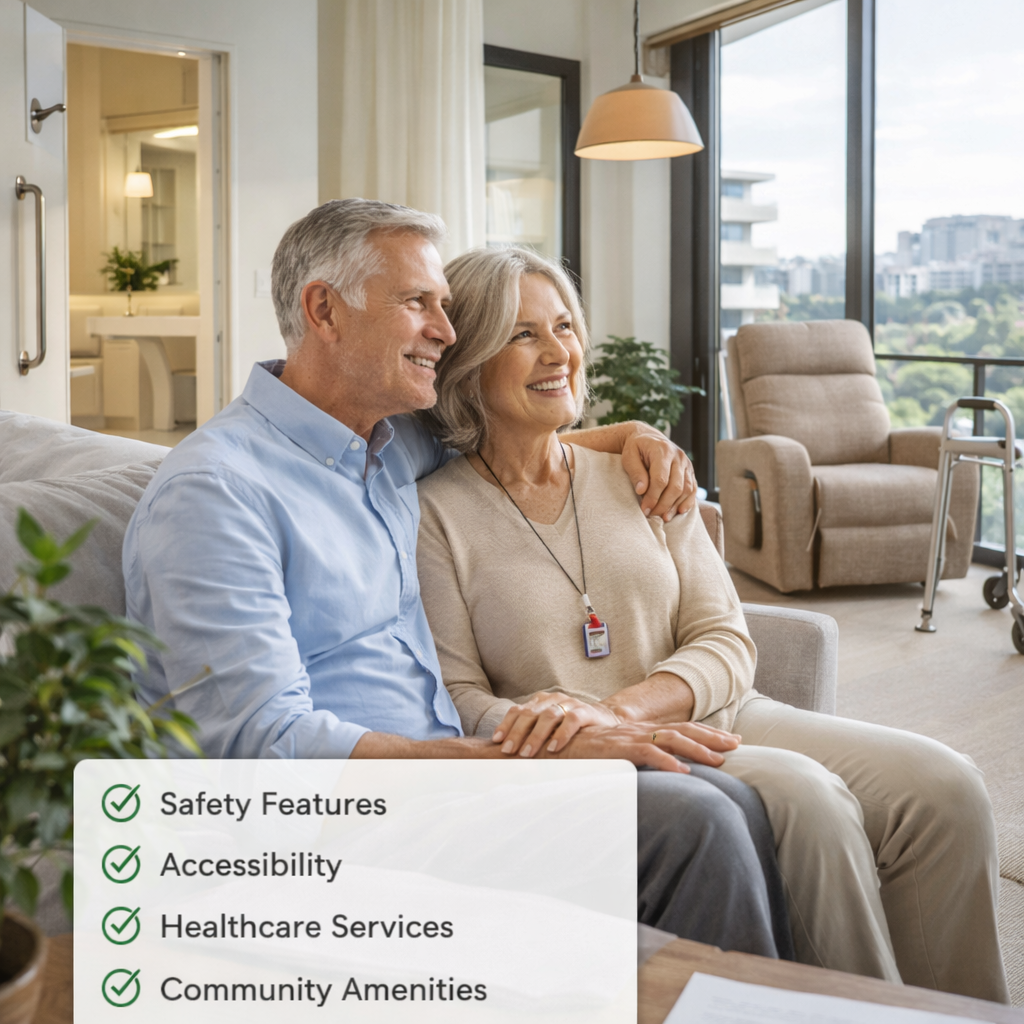
Buying an apartment for a senior citizen—whether for your parents, relatives, or yourself—requires thoughtful planning. Seniors have unique lifestyle, accessibility, and safety needs. The right home can significantly improve comfort, independence, and well-being. The wrong one can lead to daily inconveniences or health risks. This guide explains everything you must consider before purchasing an apartment tailored to senior living.
1. Prioritize Location With Strong Connectivity and Healthcare Access
The most important factor for senior-friendly housing is location. Choose an area that is peaceful yet well-connected.
Look for:
- Proximity to hospitals, clinics, and pharmacies
- Good public transportation
- Minimum traffic congestion around the society
- Nearby grocery stores and essential services
- Clean and safe surroundings
- Parks for walking and fresh air
Avoid overly crowded or noisy localities that may cause stress or mobility challenges.
2. Choose a Senior-Friendly Floor and Building Type
Senior citizens generally prefer:
- Lower floors
- Buildings with elevators
- Smaller towers to reduce walking distance
- Wide corridors and wheelchair-friendly layouts
Always check how many flats share a floor—fewer residents mean quieter, more comfortable living.
3. Look for an Apartment Layout Designed for Accessibility
The apartment’s interior plays a major role in daily comfort.
Ideal senior-friendly layout includes:
- Spacious living areas
- Minimal steps or level changes
- Non-slippery flooring
- Grab bars in bathrooms
- Wide doorways for ease of movement
- Bright, natural lighting
- Easy-to-reach switches and storage
- Compact yet functional kitchen
Avoid complex duplex layouts or homes with difficult-to-navigate designs.
4. Check Availability of Essential Amenities Within the Community
A good senior-friendly community offers peace, comfort, and convenience.
Top amenities to look for:
- Walking paths and senior-friendly seating
- 24/7 security and CCTV
- Lift with backup power
- Clean common areas
- Medical emergency support or tie-ups
- Panic buttons or call-for-help systems (in premium communities)
- Community events for social interaction
A supportive environment contributes enormously to mental and emotional well-being.
5. Evaluate Safety Features Thoroughly
Safety is non-negotiable when buying a home for seniors.
Check:
- Security guards and gated entrances
- Non-slippery tiles in common areas
- Fire exits and safety systems
- Emergency medical room or first-aid kits
- Intercom and video door phone
- Well-lit passageways and staircases
Safety ensures confidence and independence for seniors.
6. Choose the Right Apartment Size
While larger apartments may seem attractive, they might be harder for seniors to maintain. Balanced layouts are better.
Recommended configurations:
- 1 BHK for single seniors
- 2 BHK for couples
- 2.5 BHK for occasional family visitors
Investors and end-users often benchmark options by checking market-wide listings like Apartments for Sale in Bangalore, which helps compare availability, prices, unit sizes, and amenities across senior-friendly neighborhoods. This helps you determine the right balance between comfort and affordability for senior living.
7. Evaluate Water Supply, Power Backup & Ventilation
Basic infrastructure plays a crucial role in maintaining comfort, especially for seniors.
Essential checks:
- Reliable water supply
- 100% power backup for lifts and lighting
- Good natural ventilation
- Sunlight in living and bedroom areas
- Cross-breeze to minimize humidity
Poor ventilation or unstable power supply can make daily living harder for older residents.
8. Check the Builder’s Reputation and Project Age
Trusted builders create safer, more durable structures.
Before buying, investigate:
- Builder’s track record
- Customer reviews
- Past project quality
- Compliance with RERA norms
- Quality of after-sales maintenance
Older buildings with weak maintenance often develop leaks, cracks, and lift issues—avoid these unless thoroughly inspected.
9. Think About Long-Term Healthcare Requirements
As seniors age, healthcare needs may increase.
Choose a home near:
- Multi-specialty hospitals
- Physiotherapy centers
- Diagnostic labs
- Home-care service providers
- Emergency medical facilities
Premium senior-living communities even offer onsite medical staff or doctor visits.
10. Discuss Future Financial Planning With Family
Buying a senior-friendly home should align with long-term financial comfort.
Discuss:
- Loan EMI affordability (if applicable)
- Maintenance charges
- Living expenses in the locality
- Rental or resale plans if seniors later move
Transparent discussions help avoid stress later.
11. Check the Culture of the Community
The social culture of the community matters—senior citizens often value peace, respect, and friendliness among neighbors.
Observe:
- Noise levels
- Cleanliness
- Community activities
- Neighbor interactions
- Supportive societies
A positive community environment helps seniors feel welcome and included.
12. Consider a Ready-to-Move Apartment
Under-construction homes may carry possession risks and noise disturbances. Ready-to-move apartments provide clarity on:
- Actual layout
- Views
- Building quality
- Neighbor profile
- Immediate livability
This is often the safer choice for elderly residents.
13. Assess Maintenance Charges and Upkeep
High maintenance charges may be difficult for seniors on fixed income. Compare:
- Monthly maintenance costs
- Society services included
- Future maintenance projections
- Availability of in-house maintenance staff
Well-managed societies provide better value for money.
Final Thoughts: A Senior-Friendly Apartment Makes Life Safer, Easier & Happier
Buying an apartment for senior citizens requires thoughtful planning—but the right home can greatly enhance comfort, safety, and independence. Focus on accessibility, healthcare proximity, community amenities, and layout design to ensure seniors enjoy stress-free living.
By evaluating all these factors, you can confidently choose a home that supports healthy aging and provides a nurturing environment for years to come.